






Creating a relaxing home workspace is essential for maintaining productivity and well-being, especially when working remotely. A calm and organized environment can help reduce stress, improve focus, and make your workday more pleasant. Whether you have a dedicated room or just a small corner, there are effective ways to design your workspace for comfort and efficiency. In this guide, we’ll walk you through practical steps to create a relaxing home workspace that fits your needs.
Why a Relaxing Workspace Matters
When your work area feels soothing and organized, it helps your mind stay clear and focused. Stress and clutter can distract you or drain your energy. By investing time to create a space you enjoy, you enhance your creativity and workflow. A relaxing workspace supports a healthy work-life balance and encourages good posture and habits.
Choose the Right Location
Find a Quiet Spot
Start by selecting a location in your home where you can work with minimal interruptions. This could be a spare room, a quiet corner in your living room, or even a nook near a window. The key is to avoid high-traffic areas that might disturb your concentration.
Maximize Natural Light
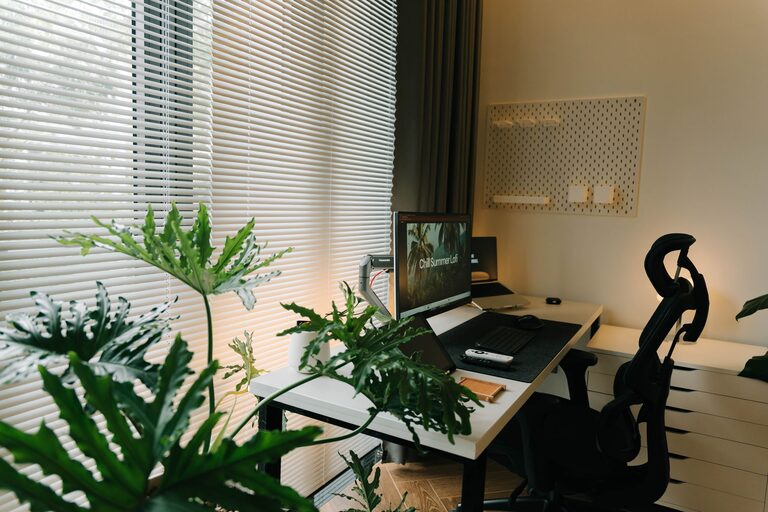
Natural light has a positive effect on mood and alertness. Try to position your desk near a window to take advantage of daylight. If natural light is limited, consider using soft white LED bulbs to mimic daylight without harsh glares.
Invest in Comfortable Furniture
Ergonomic Chair
Comfort starts with a good chair. An ergonomic chair supports your posture, reducing back and neck pain during long working hours. Look for adjustable features such as seat height, backrest tilt, and armrests.
Suitable Desk Height
Your desk should allow you to keep your forearms parallel to the floor while typing. Standing desks or adjustable sit-stand desks offer flexibility and can promote movement throughout the day.
Organize and Declutter
Keep Only Essentials
Clutter can cause distraction and stress. Keep your desk organized by storing only items you use regularly. Use drawer organizers, shelves, or containers to store supplies neatly.
Cable Management
Untangle and hide cords to keep your workspace tidy. Cable clips, sleeves, or under-desk trays make a noticeable difference in appearance and safety.
Add Calming Elements
Use Soothing Colors
Colors affect mood. Soft, neutral tones such as light blues, greens, or pastels create a calming atmosphere. You can apply these colors through wall paint, decor, or accessories.
Incorporate Plants
Indoor plants improve air quality and add a sense of tranquility. Easy-care plants like pothos, snake plants, or succulents are great choices for a workspace.
Personal Touches
Adding photos, artwork, or meaningful objects can make your space more inviting. However, avoid overdecorating to prevent visual clutter.
Control Noise and Distractions
Noise-Canceling Headphones
If your home is noisy, noise-canceling headphones can help you focus by blocking out distractions.
Soft Background Sounds
Some people find gentle background sounds like white noise, nature sounds, or instrumental music helpful for concentration.
Maintain a Clean Routine
Daily Tidying
Spend a few minutes at the end of each day organizing your workspace. This habit keeps the area welcoming and ready for the next work session.
Regular Deep Cleaning
Wipe down surfaces, dust shelves, and vacuum regularly to maintain a fresh environment.
Use Functional Technology
Monitor Placement
Position your monitor so that the top of the screen is at eye level. This helps prevent neck strain.
Adequate Lighting for Screens
Avoid glare on your screen by adjusting lighting or using an anti-glare screen protector.
Incorporate Break Spaces
If possible, set up a separate spot within your workspace for short breaks. A comfortable chair or cushion where you can stretch or relax briefly helps recharge your energy.
—
Building a relaxing home workspace doesn’t require a large budget or a complete makeover. Small adjustments such as decluttering, adding plants, and choosing comfortable furniture can transform your work area into a calm and efficient haven. By creating an environment that nurtures focus and reduces stress, you set yourself up for productive, enjoyable workdays. Take time to personalize your space and make it work for you—your mind and body will thank you!